Review: Mandala Coloring Book and Decoration for Embroidery
As a designer who has spent years translating digital vectors into physical thread, I approach every new Mandala Coloring Book and Decoration file with a specific set of questions. Does this graphic hold up when converted from a flat image to a textured surface? Will the intricate details survive the digitization process without becoming muddy blobs of thread? Today, I am putting this vintage-inspired mandala through its paces to see if it deserves a spot in your commercial embroidery library or personal craft business.
The First Impression: Vintage Charm Meets Modern Utility
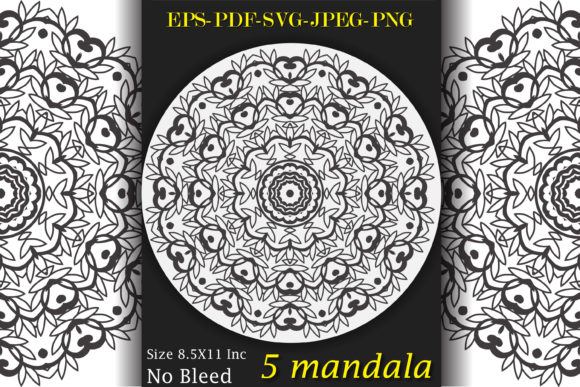
At first glance, the Mandala Coloring Book and Decoration design exudes a timeless quality. It leans heavily into the aesthetic of Islamic backgrounds and Oriental patterns, featuring decorative round ornaments that feel both historic and universally appealing. The layout is symmetrical, which is always a good sign for embroidery, as it suggests balance and stability in the final stitch. However, the description notes this is a vector illustration intended for coloring books, which immediately flags a critical consideration for us machine embroiderers. Vector lines are often thin and precise, designed for ink on paper, not necessarily for thread on fabric.
When I visualize this as an embroidery project, the mood shifts from a quiet coloring page to a bold statement piece. The vintage decorative elements suggest a rich, earthy color palette—think rusts, deep teals, and golds—that would look stunning on natural fibers like linen or heavy cotton canvas. For an Etsy seller or small shop owner looking to elevate their brand consistency, this type of design offers a level of sophistication that generic clip art simply cannot match.
Testing the Design in Real-World Scenarios
To truly understand the potential of the Mandala Coloring Book and Decoration, let's walk through a real-life scenario. Imagine you are preparing a custom embroidered tote bag for a boutique client who wants a "boho-chic" vibe. You load the design into your software, and the circular nature of the mandala fits perfectly within a 6x6 inch hoop. As the machine starts, the fill stitch begins to build up the geometric layers.
Here is where the design shines: the repetitive nature of the mandala allows for excellent stitch density management. Unlike a photo-realistic image that requires complex underlay and tiny stitches, this pattern relies on distinct shapes. This makes it forgiving for custom apparel projects like sweatshirts or aprons. If you were creating a holiday gift, such as a personalized pillow cover, the intricate details of the Mandala Coloring Book and Decoration would catch the light beautifully, adding texture and depth that customers love to photograph and share on social media.
For those selling digital product previews or printable mockups, this design serves as a fantastic asset. Even before stitching, the visual weight of the vintage mandala communicates quality. When placed on a tote bag design mockup, it instantly elevates the perceived value of the item, making it feel like a premium handmade product rather than a mass-produced commodity.
Navigating Challenges: Where Caution is Required
While the potential is high, we must be realistic about the limitations. Because this design originates as a coloring book graphic, it likely contains very fine lines. In embroidery, fine lines can be tricky. If you attempt to use this on a stretchy fabric like jersey knit for a t-shirt, the tension might distort the delicate curves of the Mandala Coloring Book and Decoration. Similarly, on dark fabrics, the contrast might not be sufficient unless you use a dense underlay or bright thread colors.
Another area of concern is the hoop size. While the overall shape is round, the outer edges of these vintage mandalas often have trailing decorative elements. If you try to force this into a small hoop, you risk cutting off crucial parts of the design, ruining the symmetry. Always check the bounding box dimensions before committing to a specific garment. Furthermore, if you plan to use this for caps or curved surfaces, the density of the fill stitch could cause puckering. In such cases, you might need to simplify the design or switch to a satin stitch outline for the finer details to maintain clarity.
Practical Notes for the Professional Designer
If you decide to integrate the Mandala Coloring Book and Decoration into your workflow, follow these practical steps to ensure a successful outcome:
- Test on Scrap Fabric: Never skip this step. Stitch the design on a scrap piece of the actual fabric you intend to use. Check how the fill stitch interacts with the fabric texture.
- Review Thread Contrast: Since the design is detailed, low-contrast thread colors can make the pattern disappear. Test black and white mockups first to ensure the visual hierarchy remains clear.
- Check Stabilizer Needs: Intricate mandalas require a solid foundation. Use a cutaway stabilizer for knits and a tear-away for wovens to prevent shifting during the long stitching process.
- Inspect Small Details: Zoom in on the digitized file. Are there gaps between stitches? Are the corners sharp enough? Sometimes, what looks perfect on a screen needs manual adjustment in the embroidery software.
- Verify Licensing: Before selling finished items or offering this as a commercial embroidery service, confirm the license terms. Ensure you have the right to sell products made with this Graphics file.
Impact on Brand and Customer Trust
Using a high-quality design like the Mandala Coloring Book and Decoration directly impacts buyer engagement. Customers today are savvy; they can tell the difference between a rushed, poorly stitched logo and a carefully executed artistic piece. When you offer a personalized gift featuring this intricate pattern, you are selling more than just a stitched object; you are selling craftsmanship.
For the craft business owner, this design adds versatility. It works equally well on a baby blanket (using softer, pastel threads) or a rugged denim jacket (using bold, contrasting colors). This adaptability increases your inventory options without requiring you to purchase dozens of different files. It becomes a staple in your design assets library, ready for seasonal updates or special orders.
Final Verdict
The Mandala Coloring Book and Decoration is a strong contender for any serious embroidery portfolio. Its vintage appeal and geometric precision make it ideal for home decor, fashion accessories, and boutique merchandise. However, success depends on your ability to manage the translation from vector to thread. By respecting the design's complexity, choosing the right materials, and testing thoroughly, you can create a finished product that stands out in a crowded market. Whether you are a hobbyist making holiday gifts or a professional running a full-scale small shop product line, this mandala offers the artistic flair needed to turn a simple piece of fabric into a cherished keepsake.